Zone 2 on the Bike: The Indoor Cyclist's Base-Building Hour
Quick Answer: The indoor bike is Zone 2’s most precise venue because the resistance dial holds the effort constant — no hills, no stoplights, no drift. Ride 45–75 minutes at conversation pace (talking is fine, singing is hard), 80–95 rpm, and adjust resistance down the moment your breathing argues. Two to three of these a week builds the aerobic base.
Zone 2 has one real problem: holding an easy-but-working effort for an hour without drifting upward.
Outdoors that’s nearly impossible. A hill pushes you into Zone 3, a stoplight drops you to zero, and the average of those two is not Zone 2 — it’s just a mess with a nice average.
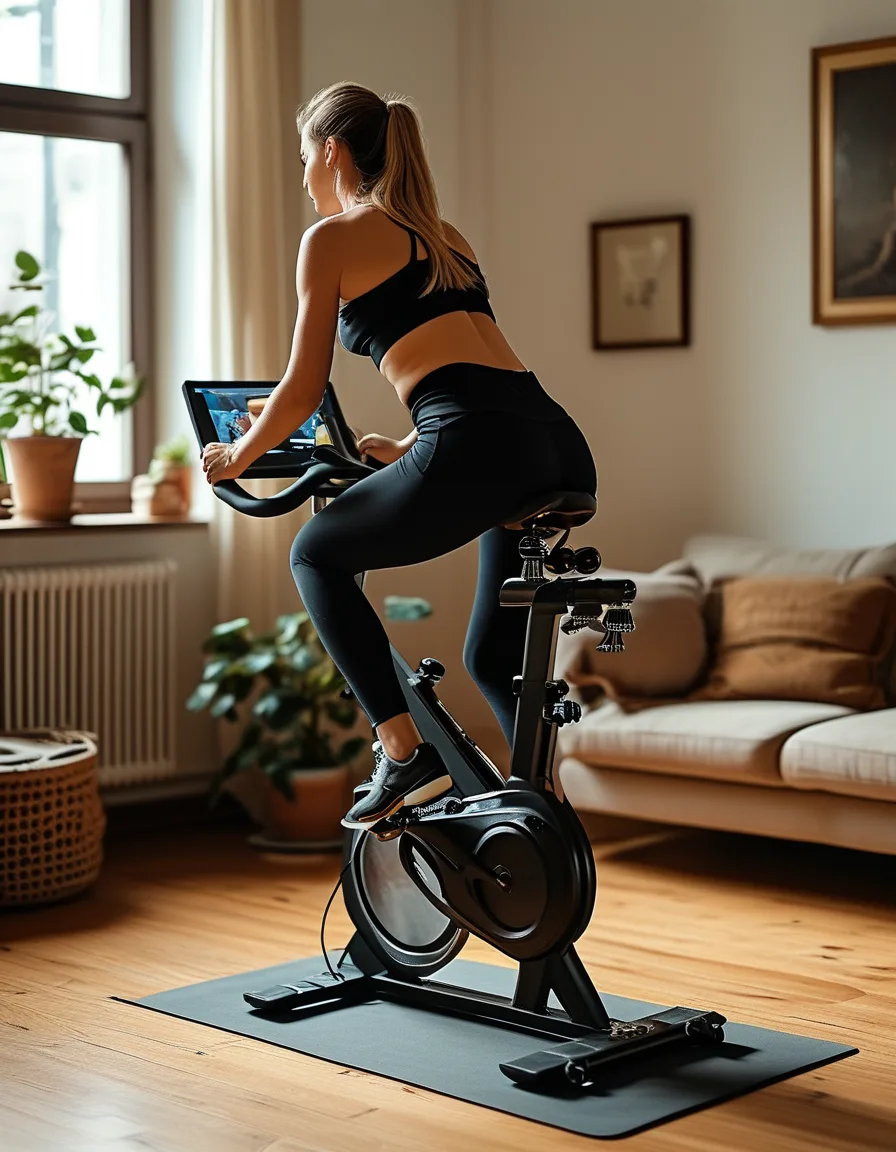
The indoor bike fixes this completely. The resistance dial is, functionally, a Zone 2 thermostat.
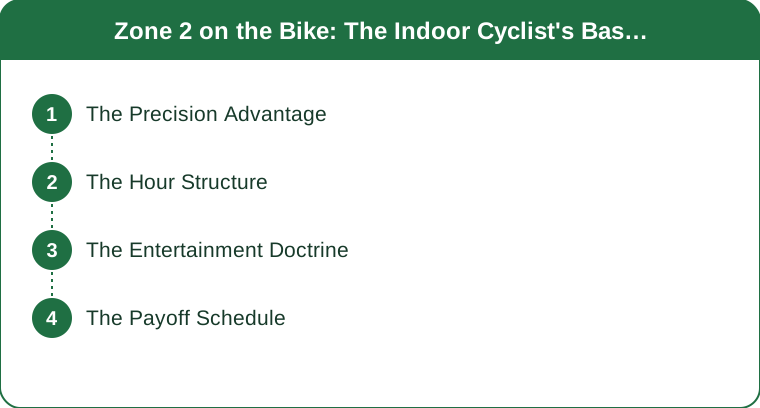
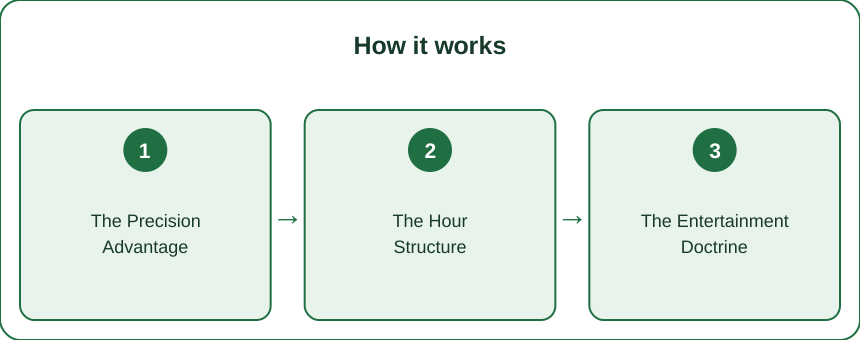
Why Is the Indoor Bike the Best Zone 2 Venue?
Because nothing interrupts the effort. No terrain, no traffic, no wind.
Calibrate the talk test once at the start of a ride, then hold it. For a prescription that specifically asks for uninterrupted steady state, nothing else complies as well — running has ground impact and pace drift, and outdoor cycling has geography.
There’s a second advantage: the bike is non-impact. You can stack two or three hours of it per week on top of a running or lifting program without the joint cost you’d pay adding the same volume on foot.
How Do You Structure the Hour?
Duration: 45–75 minutes. Start at 45 if you’re new to this; there’s no benefit in forcing 75 before your seat is used to it.
Effort: conversation pace. The practical calibration is that you can talk in full sentences but singing is hard. If you’re using heart rate, that’s roughly 60–70% of max for most people.
Cadence: 80–95 rpm for most riders. Comfortable and circular, not grinding.
Resistance: adjust down the moment your breathing starts to argue. This is the actual skill of the session.
No intervals, no surges. The discipline is staying down in the zone. Drifting upward because it feels too easy is the session’s only real failure mode — and it’s the most common one, because easy feels like cheating.
It isn’t cheating. The whole point is that this session is cheap enough to repeat.

What Do You Do for an Hour?
This is Zone 2’s underrated superpower: the effort level is fully media-compatible.
You can read subtitles comfortably. You can follow a plot. You can take a phone call, though your family may ask why you’re breathing like that.
The most effective trick is the show lock — pick one series you’re only allowed to watch on the bike. The episode becomes the timer, the hour disappears, and you stop negotiating with yourself about whether to ride today.
Functionally, a base-building block is scheduled television with a heart-rate floor.
Myth vs Fact
Myth: If it’s easy, it isn’t doing anything. Fact: Zone 2 drives mitochondrial density and capillary growth — adaptations that hard intervals don’t produce as efficiently. The ease is the mechanism, not a compromise.
Myth: You need a power meter. Fact: The talk test is a reliable proxy and it’s free. A power meter adds precision, not necessity.
Myth: More Zone 2 is always better. Fact: Volume has to fit your total training load and your recovery. Two to three hours a week is a real base block for most non-athletes; piling on more while also lifting hard is how you end up flat.
Myth: Indoor riding is inferior to outdoor. Fact: For this specific session, it’s superior. Outdoor riding wins on enjoyment and bike handling; indoor wins on control.
What’s the Payoff, and When?
The aerobic base compounds invisibly and then obviously.
Around week 4–6, the same watts start costing fewer heartbeats. Your resting heart rate drifts downward — the clearest free confirmation you’ll get that it’s working.
Then the second-order effects arrive: hard sessions recover faster, outdoor rides climb easier, and long efforts stop falling apart at the end.
Two to three indoor base hours a week, through any season. The least dramatic training block in existence, with the largest compounding receipt.
FAQ
How do I know I’m actually in Zone 2 without a heart rate monitor?
Use the talk test: you should be able to speak a full sentence comfortably but find singing genuinely difficult. If you’re gasping between words you’re too high; if you could sing a chorus you’re too low.
Can I do Zone 2 on a spin bike without a power readout?
Yes. Set a resistance that lets you hold 80–95 rpm at conversation effort, and note the resistance number so you can repeat it. Consistency matters more than knowing the exact wattage.
How often should I ride Zone 2?
Two to three sessions a week is a solid base block for most people. If you’re also running or lifting hard, keep it at two and treat it as recovery-compatible volume rather than extra stress.
Why does my heart rate drift up during a long steady ride?
That’s cardiac drift — normal, driven mostly by heat and fluid loss. Drop the resistance slightly to hold the effort, drink through the ride, and put a fan on yourself. Indoors, a fan makes a bigger difference than most people expect.
TL;DR:
- Indoor bike is the most controllable venue for Zone 2 — no hills, no stoplights, no drift
- 45–75 minutes at conversation pace: talking fine, singing hard
- 80–95 rpm; drop resistance the moment breathing argues
- The only failure mode is drifting upward because easy feels wrong
- Lock one TV series to the bike and the hour manages itself
- Expect the same watts to cost fewer heartbeats around week 4–6
- Two to three sessions a week is a real base block
- Use a fan — cardiac drift indoors is mostly a heat problem
Dial the resistance, hold the conversation pace, lock the show. Zone 2 wanted a controlled venue, and the indoor bike was built as one — entertainment rack included.
If you’re new to training, have a heart condition, or are on medication that affects heart rate, check with a doctor before building a base block — heart-rate zones can read very differently under beta blockers.
Keep Reading
This article is for general informational purposes only and is not medical advice. Always consult a qualified health professional for guidance specific to you.