Why Breathing Only Through Your Nose Is a Faster Zone 2 Check Than the Talk Test
The talk test, staying able to hold a conversation without gasping, is the most commonly recommended way to check Zone 2 pace without a heart rate monitor. But it requires an actual conversation partner or talking out loud alone, which isn’t always practical, while nasal-only breathing offers a similar built-in pace ceiling that can be checked silently and continuously without needing to speak at all.

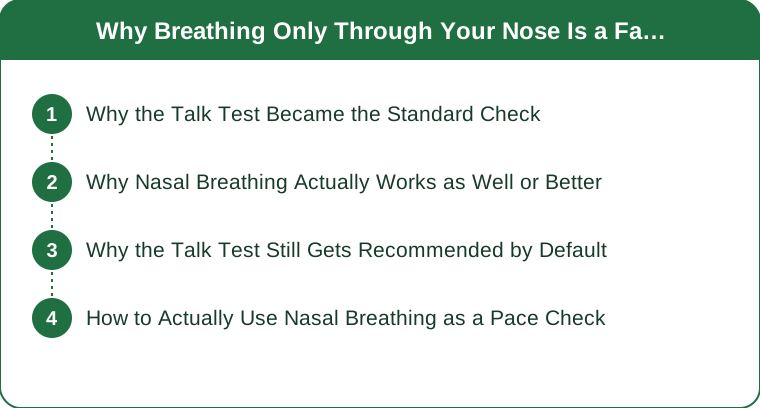
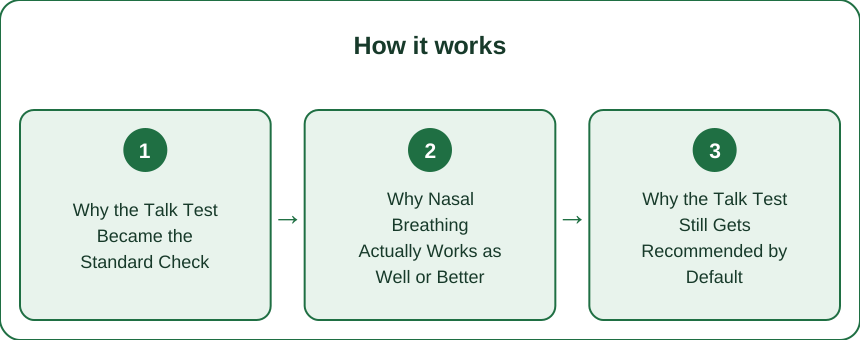
Why the Talk Test Became the Standard Check
The accessibility appeal: being able to hold a conversation without gasping requiring no equipment and being simple to explain, which made it the go-to Zone 2 pace check recommended across most beginner guides and coaching advice.
Why Nasal Breathing Actually Works as Well or Better
The physiological overlap: breathing comfortably through the nose alone naturally caps pace at a similar aerobic intensity to what the talk test targets, since nasal breathing’s airflow limit becomes uncomfortable at roughly the same effort level where conversation starts to break down, but it can be self-monitored continuously and silently without needing a partner or talking out loud.

Why the Talk Test Still Gets Recommended by Default
The overlap: both tests pointing to a similar intensity zone, which is why they’re often mentioned together, but the talk test still gets the default recommendation mostly out of habit and simplicity of explanation, even when it’s less practical for a solo runner who doesn’t want to talk to themselves.
How to Actually Use Nasal Breathing as a Pace Check
The practical method: running or cycling with the mouth closed and breathing only through the nose, slowing down the moment that becomes uncomfortable or forces a mouth-breathing switch, and treating that threshold as the Zone 2 ceiling, and the frame (nasal-only breathing caps pace at roughly the same intensity the talk test targets — it’s a silent, continuous way to self-check Zone 2 pace without needing to talk.)
The talk test is the most commonly recommended way to check Zone 2 pace without a heart rate monitor, but it requires an actual conversation partner or talking out loud alone, which isn’t always practical. Breathing comfortably through the nose alone naturally caps pace at a similar aerobic intensity, since nasal airflow becomes uncomfortable at roughly the same effort level where conversation starts to break down, but it can be self-monitored silently and continuously. Both tests point to a similar intensity zone, which is why the talk test still gets the default recommendation out of habit even when it’s less practical solo. Running with the mouth closed and slowing down the moment that becomes uncomfortable is what actually gives a silent Zone 2 pace check.
Keep Reading
This article is for general informational purposes only and is not medical advice. Always consult a qualified health professional for guidance specific to you.