Zone 2 vs HIIT: Which Cardio Should You Actually Be Doing (and Why Not Both)?

Quick Answer: Zone 2 (slow, steady cardio) and HIIT (short, intense intervals) build different fitness qualities, so it’s not really a competition — the smartest approach uses both. Do mostly zone 2 (around 80% of your cardio) to build your aerobic base and metabolic health, with some HIIT (around 20%) for VO2max and power, balanced with recovery and strength training.
You’ve probably seen both camps arguing online: the slow-and-steady zone 2 crowd insisting intensity is overrated, and the short-and-brutal HIIT crowd insisting nobody has time for an hour-long jog. Here’s the thing — they’re both right, because they’re not actually talking about the same tool.
What’s the actual difference between zone 2 and HIIT?
Zone 2 and HIIT sit at opposite ends of the intensity spectrum, and that’s exactly the point:
- Zone 2 is slow, steady cardio done at a conversational pace
- HIIT is short, intense intervals done at or near your max effort
- Each builds different fitness qualities — they’re not interchangeable
- Both are valuable. This isn’t an either-or decision
- The smartest approach for most people uses both, just in different proportions
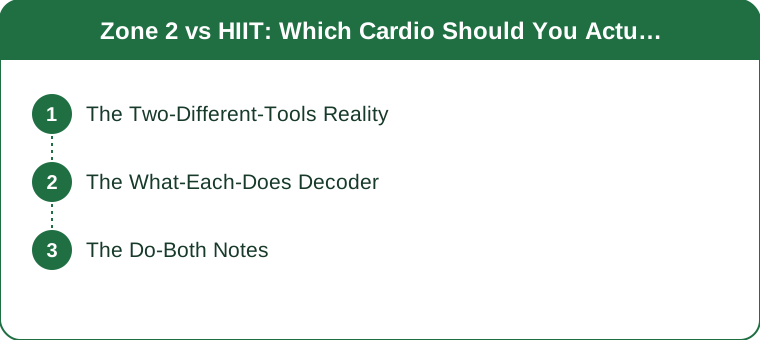
What does zone 2 do, and what does HIIT do?
Zone 2 is your aerobic-base builder:
- Builds your aerobic base and endurance
- Is sustainable and low-stress on your body
- Improves fat metabolism and metabolic health
HIIT is your efficiency-and-power builder:
- Builds VO2max and power efficiently
- Is highly time-efficient — you can get a lot done in a short session
- Is higher-stress on your body, which is exactly why you limit it
Both improve overall cardiovascular fitness, just via different pathways — and both are easiest to dial in accurately when you train by heart-rate zones rather than by feel alone.

How should you actually combine zone 2 and HIIT?
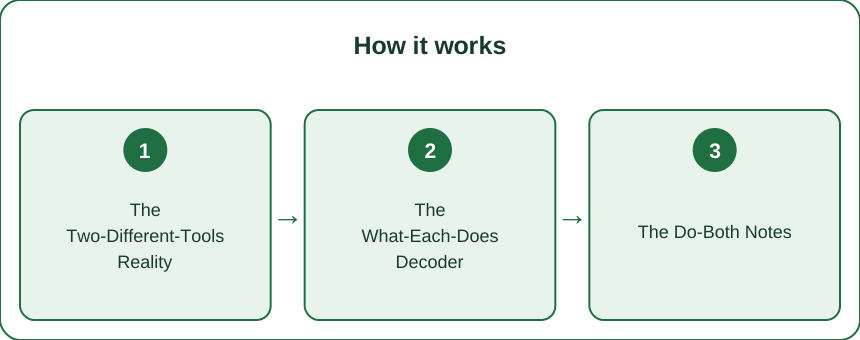
The do-both approach, broken down:
- Mostly zone 2, some HIIT — an 80/20 split is a reasonable general target
- Zone 2 is the base — it’s the cardio you do most often
- HIIT stays sparing — because it’s genuinely stressful on your body, more isn’t automatically better
- Zone 2 works in almost any mode — walking, running, or cycling all count
- Use a heart-rate monitor to actually stay in your zones rather than guessing
- Balance both with recovery — neither replaces rest
- Add strength training on top of cardio (both types) for a complete program
Myth vs fact: zone 2 and HIIT
Myth: HIIT is always the better choice because it’s more time-efficient. Fact: HIIT is efficient for building VO2max and power, but it doesn’t build your aerobic base the way zone 2 does — and its higher stress load means you can’t do it every day without diminishing returns.
Myth: Zone 2 is a waste of time because the intensity is so low. Fact: Low intensity is the entire point — zone 2’s sustainability is what lets you build your aerobic base and support metabolic health without accumulating the stress that limits how much HIIT you can do.
Myth: You have to pick one and stick with it. Fact: The two aren’t competing for the same job. The combination — mostly zone 2 with some HIIT — is what actually builds complete cardiovascular fitness (and here’s the part most people skip: neither one works without recovery and strength training rounding things out).
Mini FAQ
Is zone 2 or HIIT better for weight loss?
Both contribute — zone 2 supports fat metabolism and metabolic health through sustainable, low-stress volume, while HIIT is a time-efficient way to add intensity. Neither is a magic bullet on its own; the combination, done consistently, is what supports overall metabolic health.
How much HIIT should you do if you’re mostly doing zone 2?
A general target is around 20% of your cardio as HIIT, with the remaining 80% as zone 2. HIIT should stay sparing because it’s higher-stress on your body, so more isn’t automatically better.
Do I need a heart-rate monitor to train zone 2 or HIIT properly?
It helps a lot. Training by heart-rate zones lets you confirm you’re actually in zone 2 (rather than accidentally drifting into a harder effort) and helps you gauge genuine HIIT intensity, rather than relying on feel alone.
A note on intensity and health
HIIT’s higher-stress nature means it’s worth easing into gradually rather than jumping in at full intensity, especially if you’re new to structured cardio training or returning after time off. If you have any underlying heart or health conditions, or you experience chest pain, unusual shortness of breath, dizziness, or other concerning symptoms during exercise, stop and check in with a doctor before continuing — this article is general fitness information, not personalized medical advice.
TL;DR
- Zone 2: slow, steady, low-stress — builds aerobic base and metabolic health
- HIIT: short, intense, time-efficient — builds VO2max and power, but higher-stress
- Neither replaces the other — they build different things
- General target: ~80% zone 2, ~20% HIIT
- Use a heart-rate monitor to actually stay in your zones
- Balance both with recovery and strength training
The cardio world has split into two camps — slow-and-steady zone 2 and short-and-brutal HIIT — each insisting theirs is best. The truth is they do different things. Zone 2 builds your aerobic base and metabolic health sustainably (low-stress); HIIT builds VO2max and power time-efficiently (but higher-stress). Do both — mostly zone 2 (80%) with some HIIT sparingly (20%), using a heart-rate monitor for your zones, balancing them with recovery, and adding strength training. Which cardio you should actually be doing, and why not both.
Keep Reading
This article is for general informational purposes only and is not medical advice. Always consult a qualified health professional for guidance specific to you.