Zone 2 Cardio: Why Going Slower Might Be the Smartest Training You Do
Fitness culture spent decades yelling go harder — and then the longevity scientists and elite endurance coaches got podcast microphones and revealed their shared secret: most of their cardio is deliberately, almost embarrassingly easy. Zone 2 training — steady effort at a pace where you can still hold a conversation — builds the aerobic engine that underpins health, endurance and metabolism, and it is arguably the most woman-friendly, sustainable training concept to go mainstream in years. Slow down. Seriously. Here is why. (General fitness information — anyone with cardiac conditions should shape training with their doctor.)

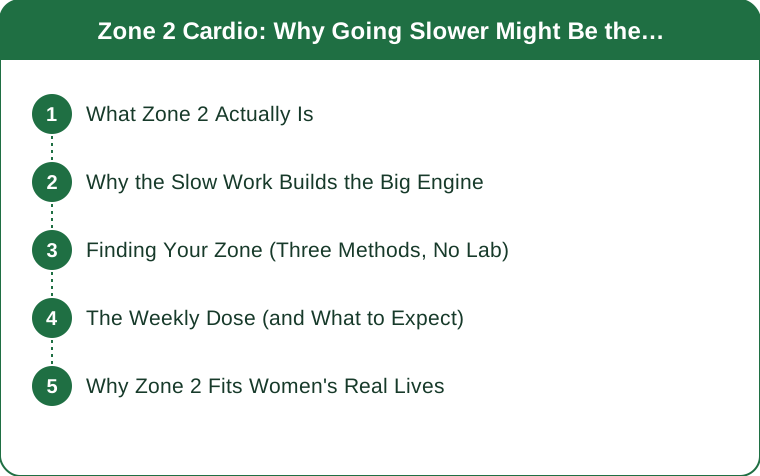
What Zone 2 Actually Is
Training zones ladder your effort from strolling (Zone 1) to gasping (Zone 5), and Zone 2 sits at the highest intensity you can sustain while still speaking in full sentences — roughly 60–70% of max heart rate. Physiologically it is the sweet spot where your body works meaningfully but stays predominantly aerobic: fat-burning metabolism, manageable stress, no gasping debt. It feels suspiciously easy, which is precisely why untrained instincts skip past it — and why most casual exercisers accidentally train in the dead zone above it: too hard to be easy, too easy to be hard, recovery-costly without the payoff of either.
Why the Slow Work Builds the Big Engine
Zone 2’s résumé explains the podcast obsession: sustained easy-pace work drives mitochondrial growth (more and better cellular power plants — the machinery of energy and, per longevity researchers, healthy aging), expands fat-burning capacity and metabolic flexibility, strengthens the heart with minimal recovery cost (you can do it often, which is the point), and builds the aerobic base that makes every harder effort — the 5K, the HIIT class, the stairs at work — feel easier. Elite endurance athletes famously spend most of their training here. The counterintuitive rule holds top to bottom: the easy work enables the hard work.

Finding Your Zone (Three Methods, No Lab)
From simple to precise: the talk test — you can speak in full sentences but singing would be unpleasant; if you can only manage short phrases, you have drifted up a zone (this humble test tracks lab markers remarkably well). The math — roughly 180 minus your age as a ceiling heartbeat, or 60–70% of estimated max HR, watched on any fitness tracker. The feel — effort around 4-out-of-10: working, warm, sustainable seemingly forever. For most women this means brisk-to-very-brisk walking, incline treadmill, easy cycling, slow jogging or the elliptical. If your ego whispers this is too easy, you are probably doing it exactly right.
The Weekly Dose (and What to Expect)
The consensus prescription: 2–4 sessions weekly, 30–60 minutes each, aiming for a total of 150-plus easy-effort minutes — walkable, cycleable, podcast-compatible (Zone 2’s secret weapon: it pairs with entertainment and conversation, making volume painless). Timeline honesty: weeks one to four feel almost too pleasant to count; weeks four to eight bring the tells — resting heart rate drifting down, hills feeling flatter, recovery quickening; months in, the compounding shows everywhere from energy to bloodwork. Keep one weekly session harder if you like intensity (the 80/20 blend), but guard the easy days from ambition. Their easiness is the mechanism.
Why Zone 2 Fits Women’s Real Lives
Beyond physiology, the practical case: Zone 2 is low-injury-risk (gentle on joints and pelvic floor), low-recovery-cost (no wrecked tomorrow — it stacks with strength training instead of competing), stress-reducing rather than stress-adding (relevant for cortisol-loaded seasons of life), and socially compatible — it is literally conversation-pace, making it the training zone friendships fit inside. It rehabilitates the walk, the easy ride, the slow jog from consolation prizes into the main event. In a culture that equated sweat-drenched with worthwhile, Zone 2 is quiet permission: the sustainable middle effort was the elite strategy all along.
Zone 2, summarized: conversation-pace cardio, 2–4 sessions and 150-plus minutes weekly, easy enough to enjoy and scientifically heavy enough to build your aerobic engine, metabolism and healthspan. Take the talk test on tomorrow’s walk and slow down until full sentences flow. The hardest part of Zone 2 is believing something this comfortable is working. The mitochondria are not confused. They are multiplying.
Keep Reading
This article is for general informational purposes only and is not medical advice. Always consult a qualified health professional for guidance specific to you.